Common faults and warning signs
- High leaving-water temperature
- Unexpected trips or alarm codes
- Low water flow or unstable pressure
- Noise, vibration or rising energy use
 Book a service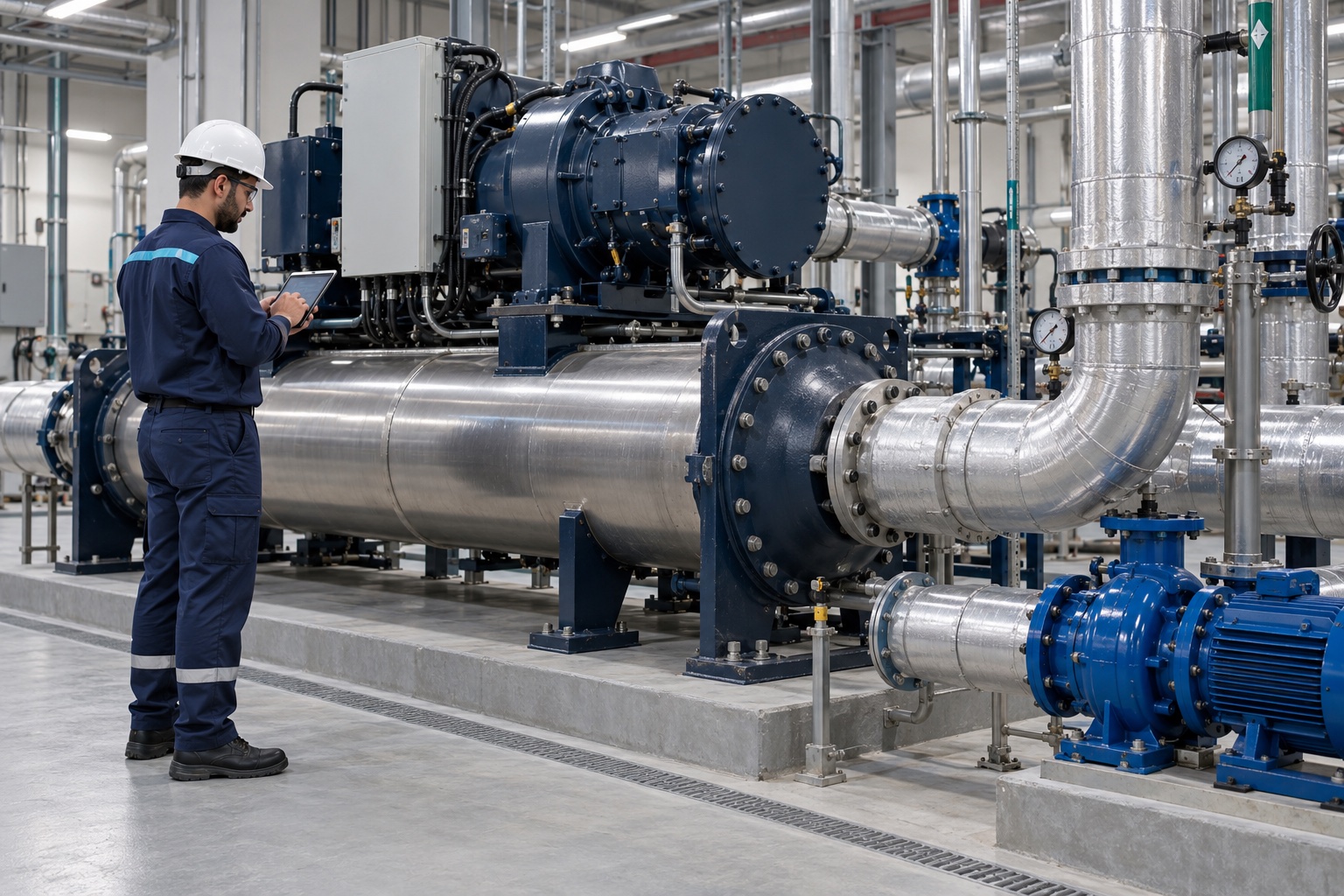
Water & pump systems
Methodical fault finding for chilled-water systems, from the refrigeration circuit to pumps, controls and heat transfer.
The equipment
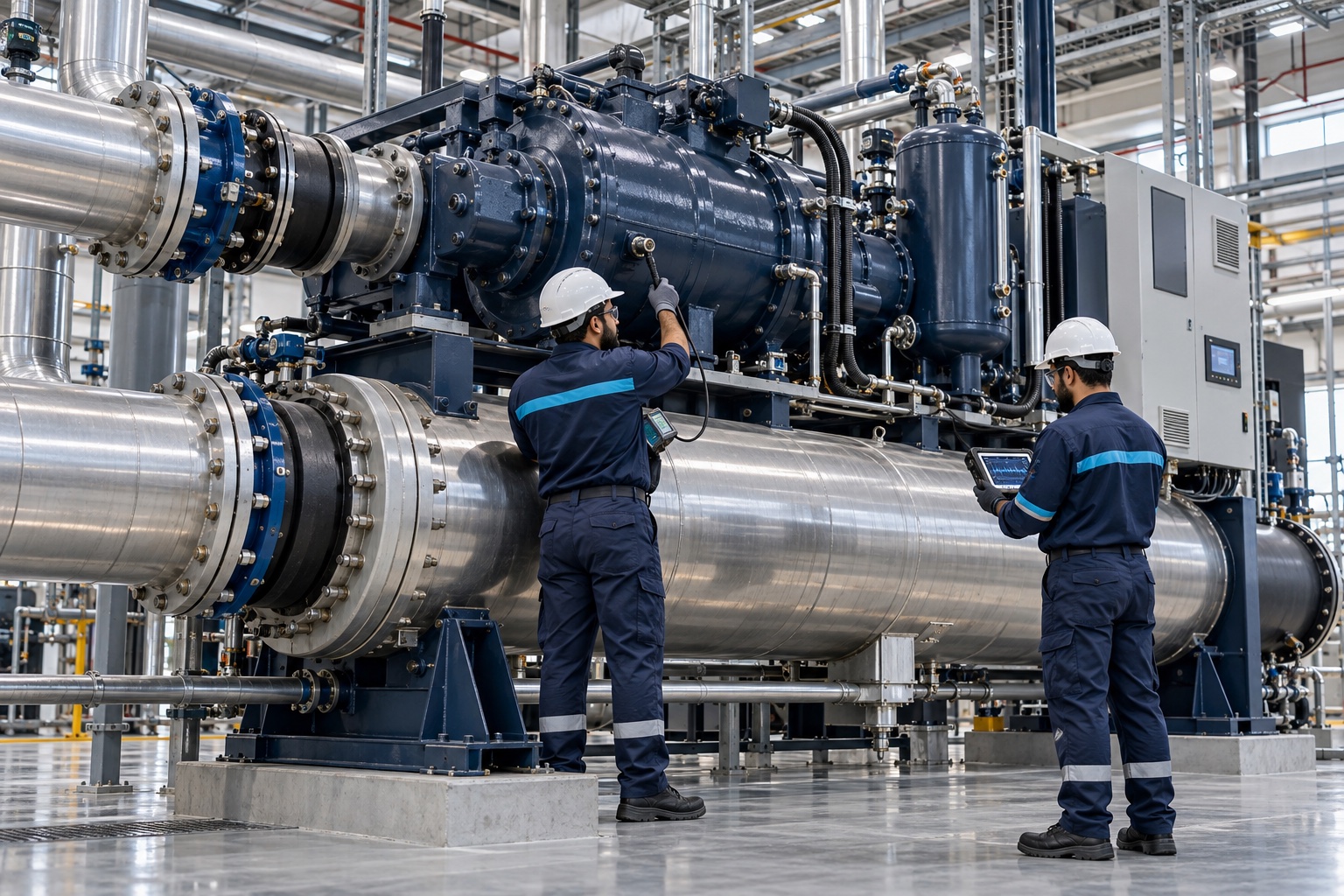
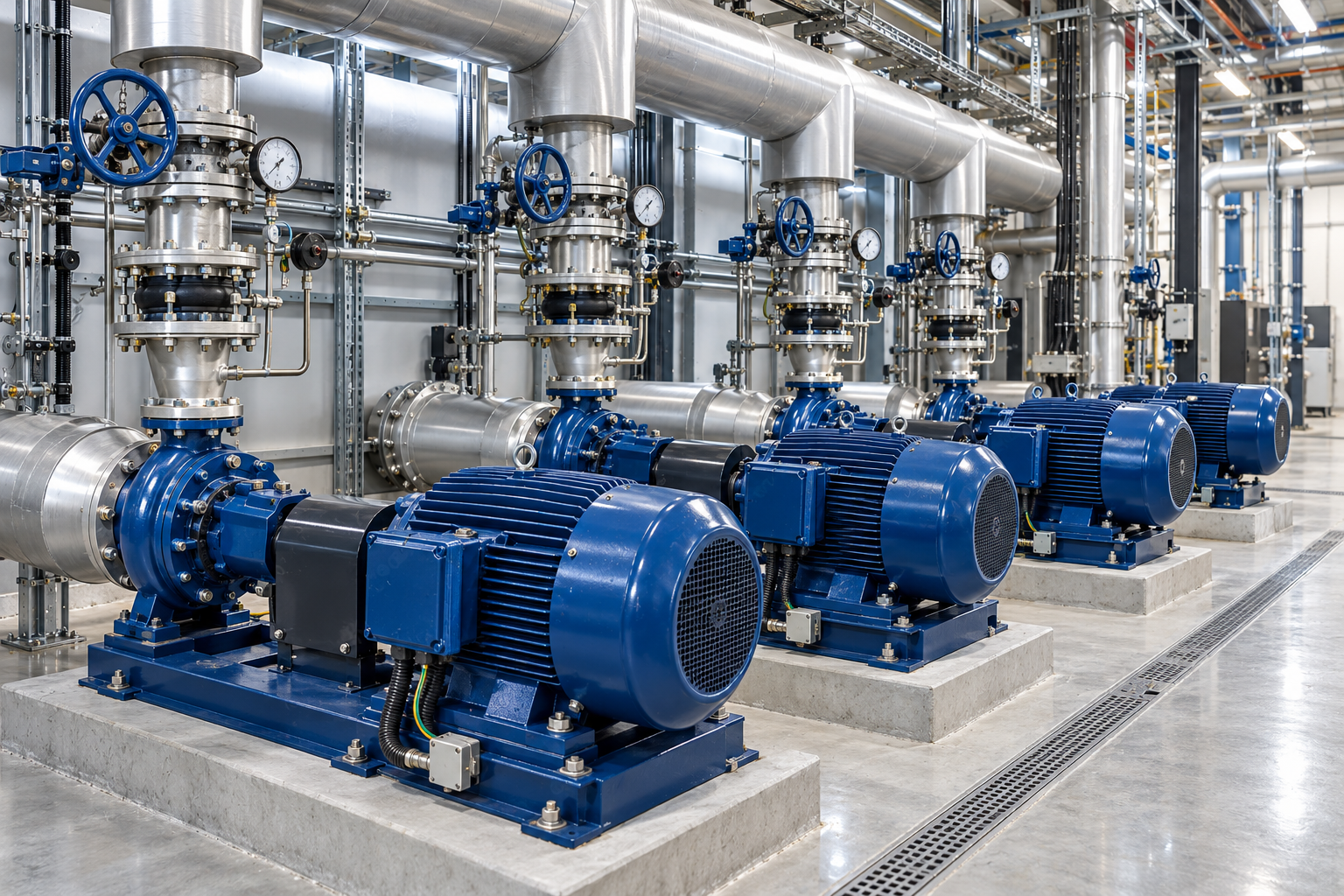
A water chiller removes heat from a circulating water or water-glycol loop, then distributes that cooling through air handlers, fan-coil units or process equipment. Because performance depends on refrigerant, water flow, controls and heat rejection working together, a useful diagnosis looks at the complete system rather than one component in isolation.
Diagnosis before decisions
A clear service process
Measurements guide the repair scope. After the agreed work, operation is checked again against the original symptom.
Confirm the load, recent alarms and operating history.
Check water temperatures, flow, refrigerant readings and electrical values.
Address the agreed mechanical, electrical or control fault.
Run the chiller under load and confirm stable leaving-water performance.
Where it fits
Ready when you are
Share the equipment, symptoms and location. We’ll use that information to help define the next step.
Book water chillers service