Common faults and warning signs
- Temperature rises or varies across the room
- Ice builds on the evaporator or product
- Compressor runs continuously or will not start
- Water leakage, fan noise or door condensation
 Book a service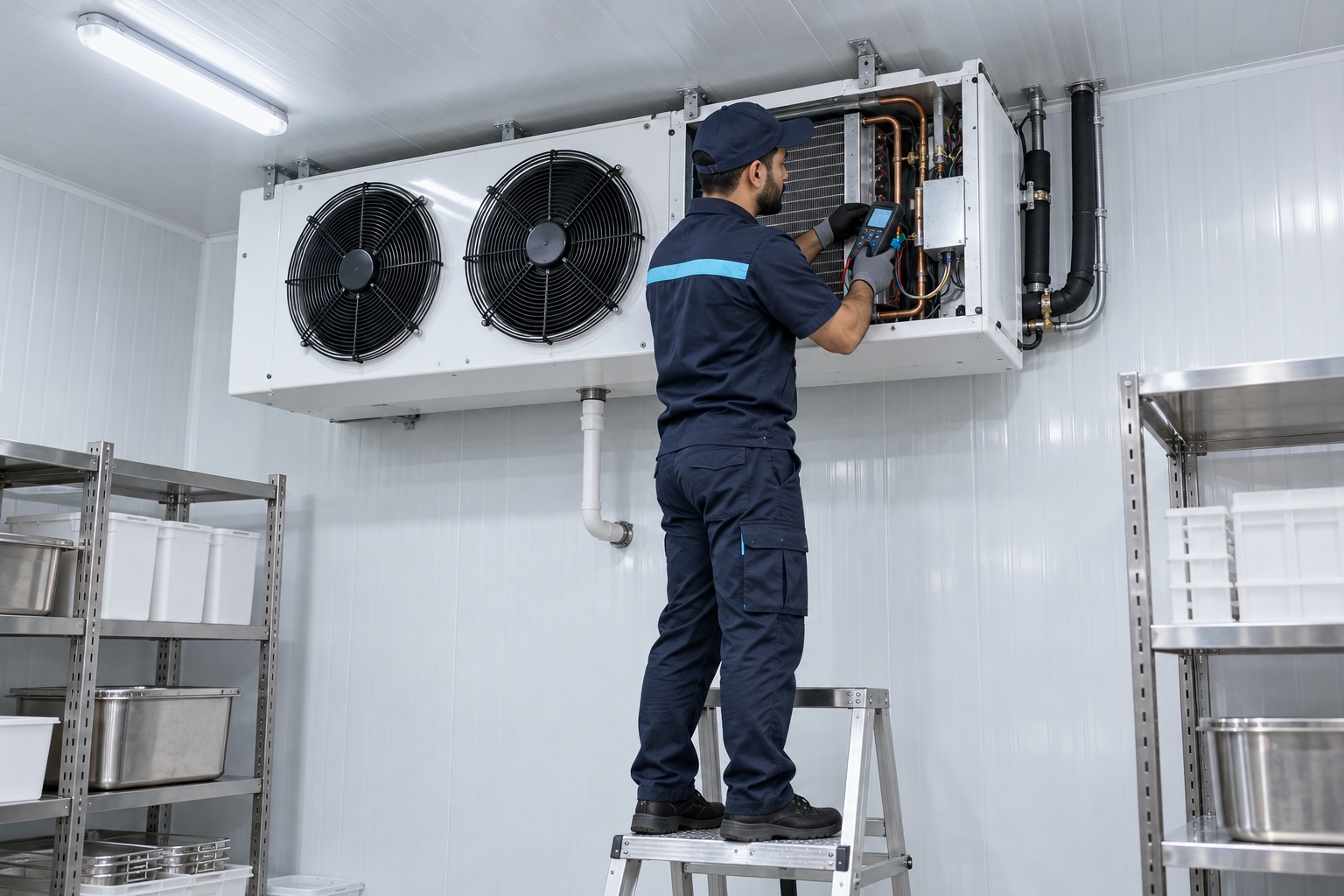
Specialist refrigeration
Restore stable storage temperatures with a complete check of refrigeration, airflow, controls, doors and defrost operation.
The equipment
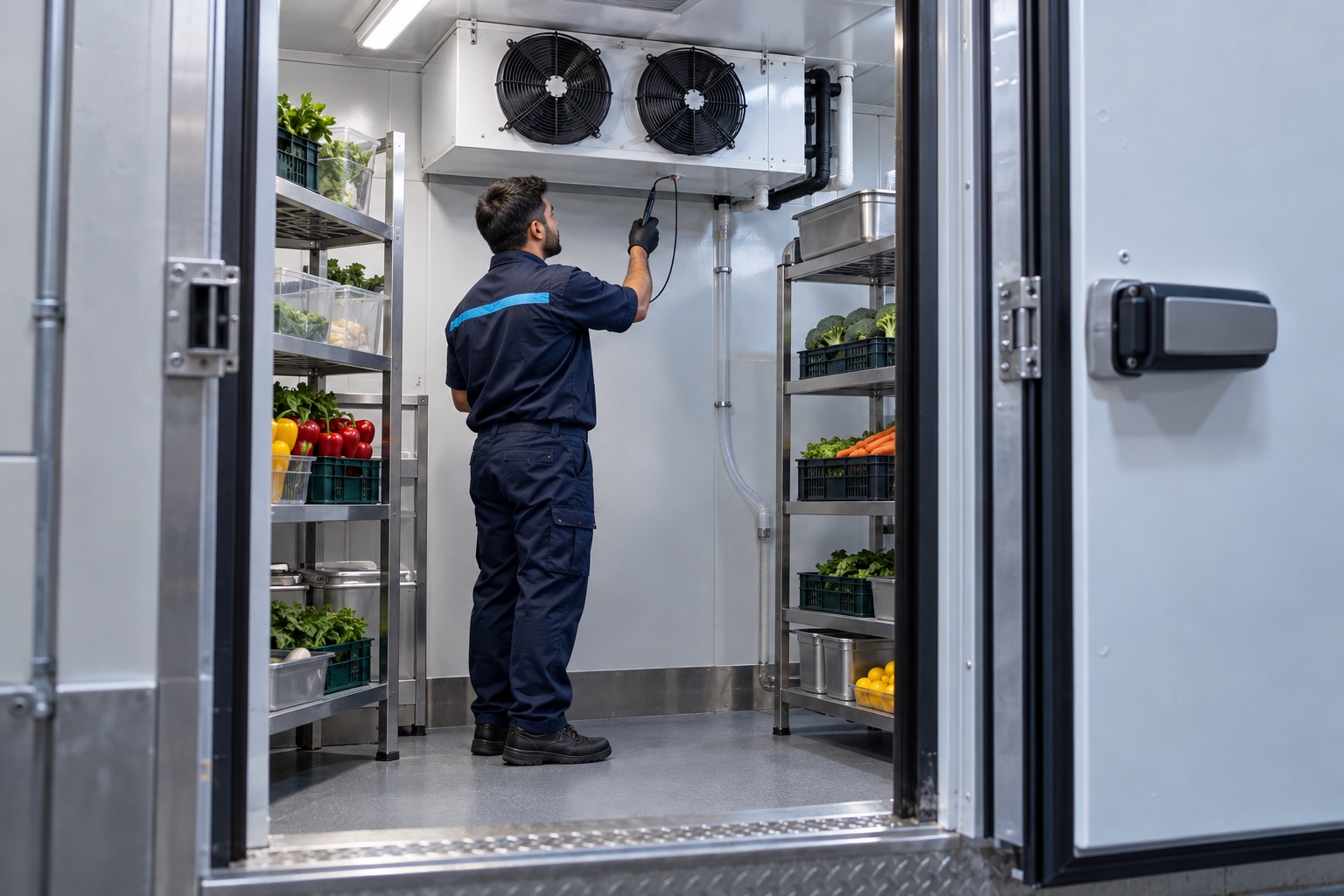
A cold room uses an insulated enclosure, evaporator, condensing unit and controls to hold products within a defined chilled temperature range. Temperature drift can result from refrigeration faults, iced coils, restricted airflow, poor door sealing or a defrost and control problem.
Diagnosis before decisions
A clear service process
Measurements guide the repair scope. After the agreed work, operation is checked again against the original symptom.
Review stored-product risk and record room conditions.
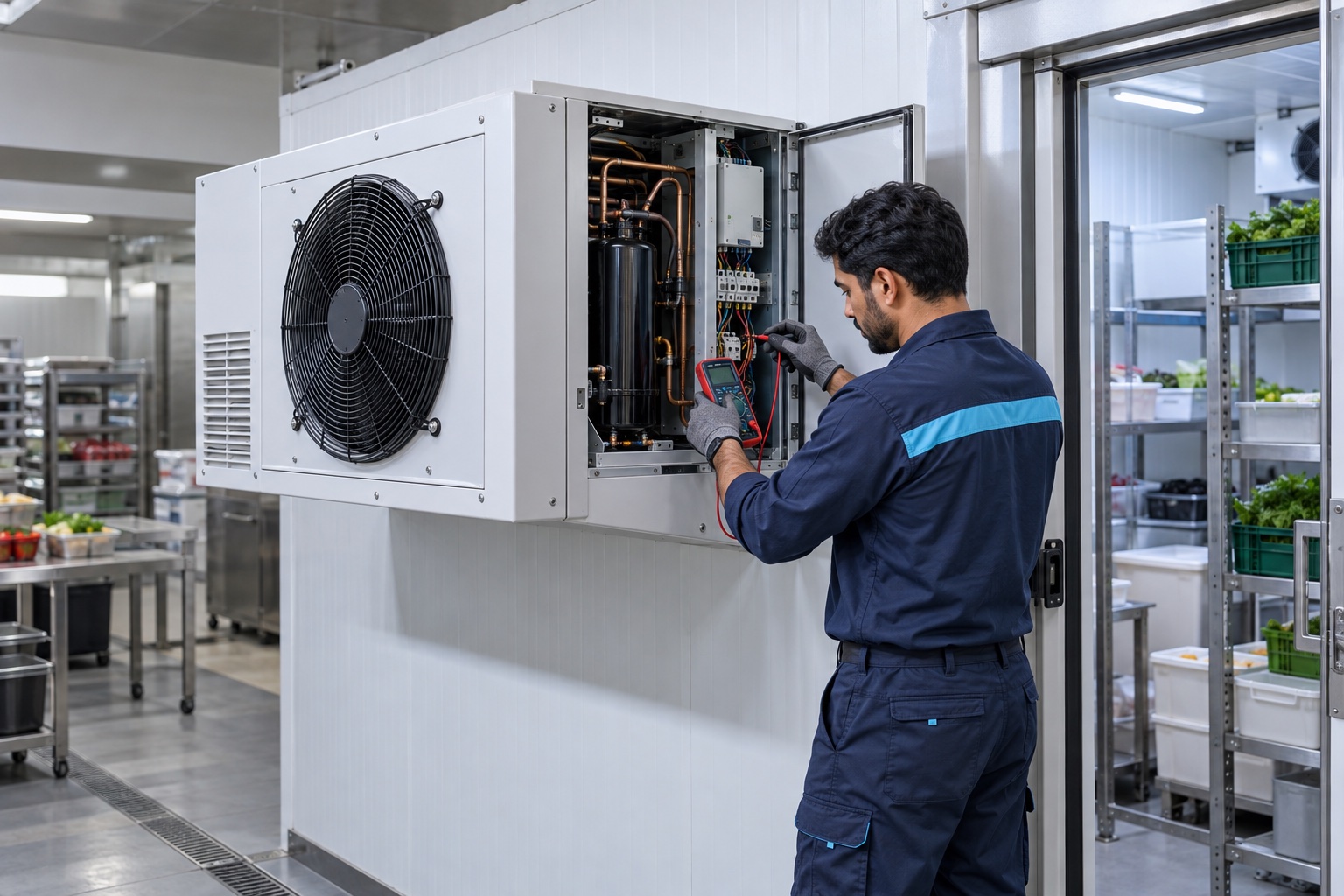
Test airflow, defrost, controls and the refrigeration circuit.
Complete the agreed mechanical, electrical or sealing work.
Confirm pull-down and stable temperature through an operating cycle.
Where it fits
Ready when you are
Share the equipment, symptoms and location. We’ll use that information to help define the next step.
Book cold rooms service