Common faults and warning signs
- Process temperature rises under load
- Repeated high- or low-pressure trips
- Capacity falls or compressor loading becomes unstable
- Pump, vibration, oil or refrigerant alarms
 Book a service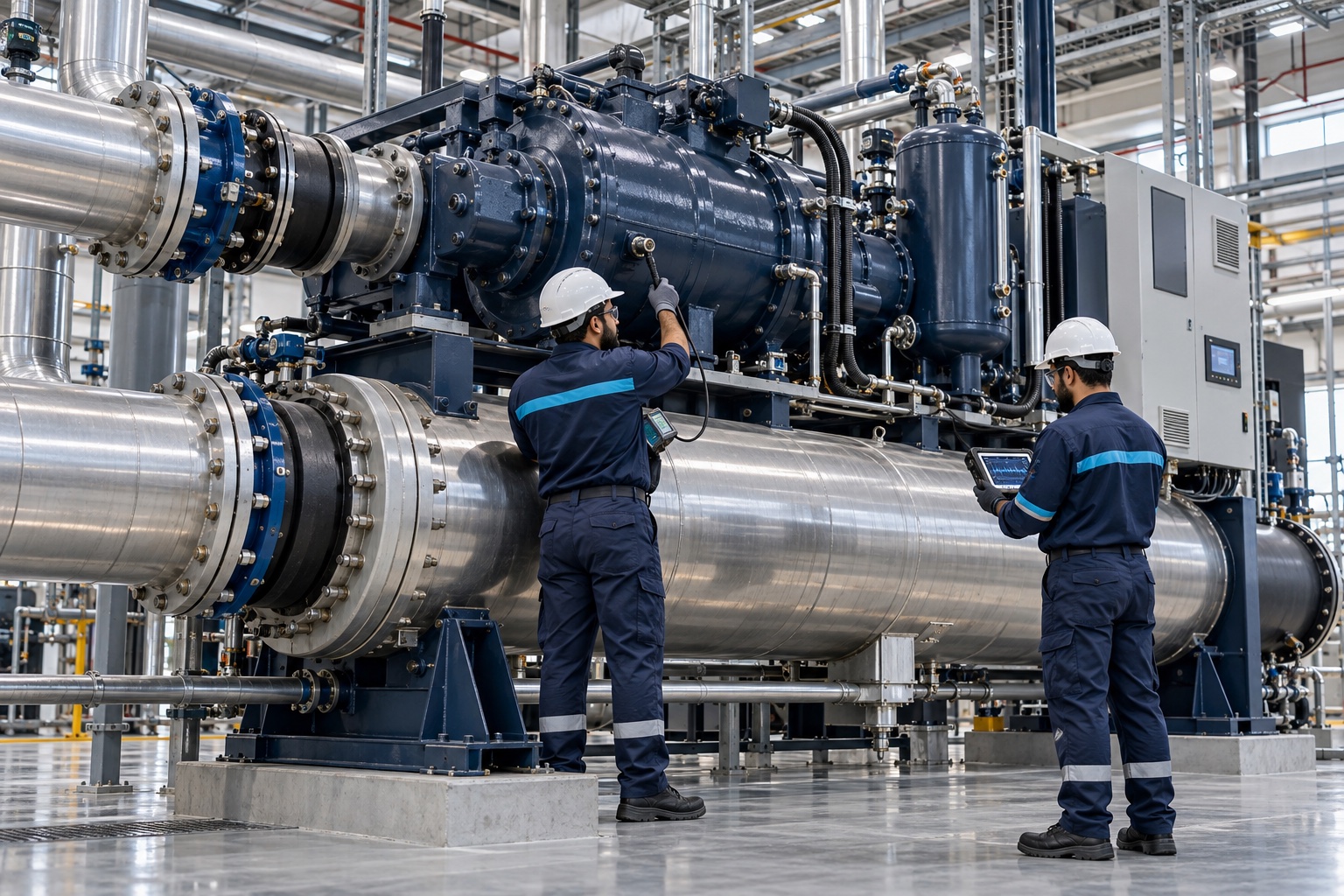
Cooling plants
Disciplined diagnostics for high-load and process cooling where stable temperatures depend on the whole plant working together.
The equipment
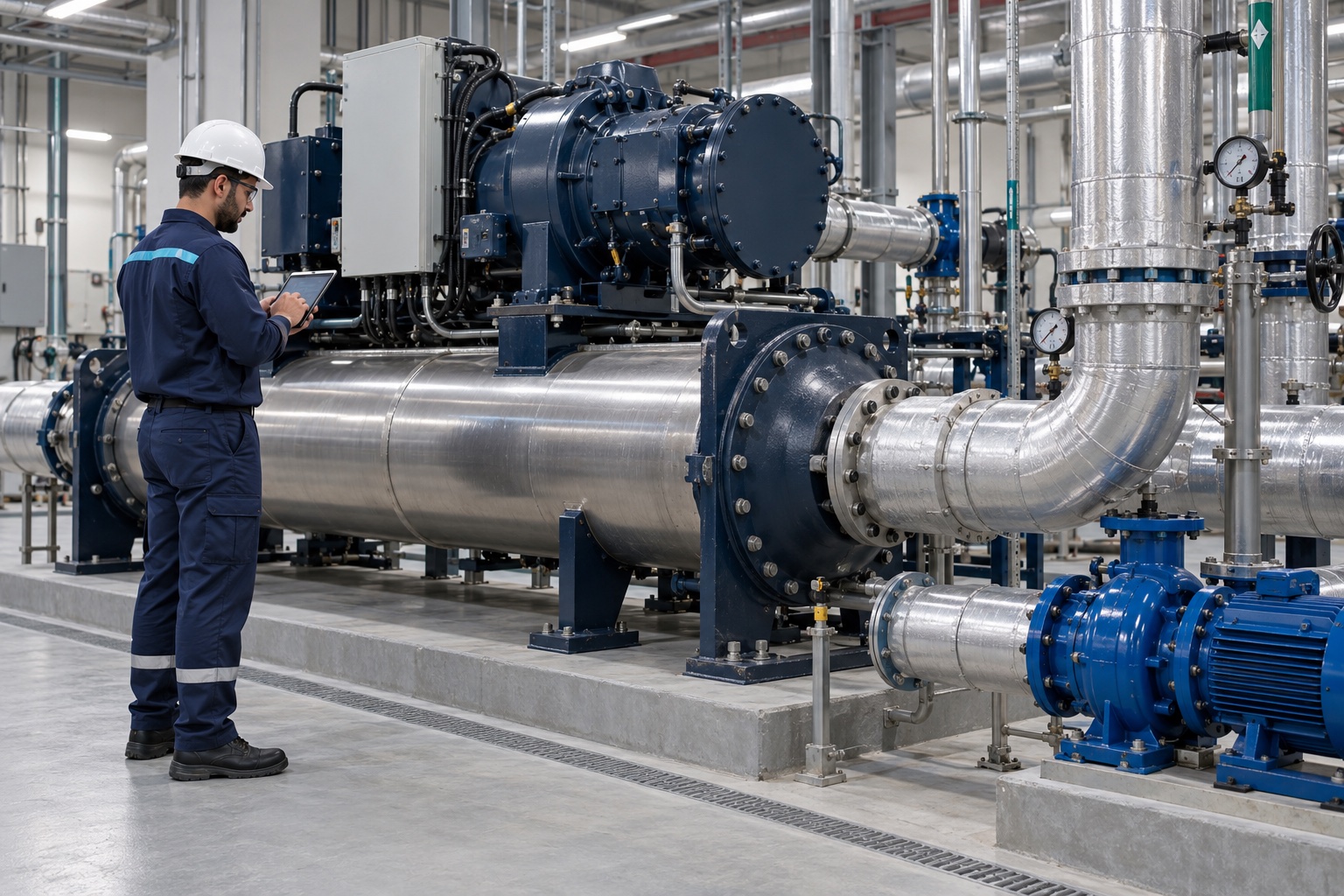
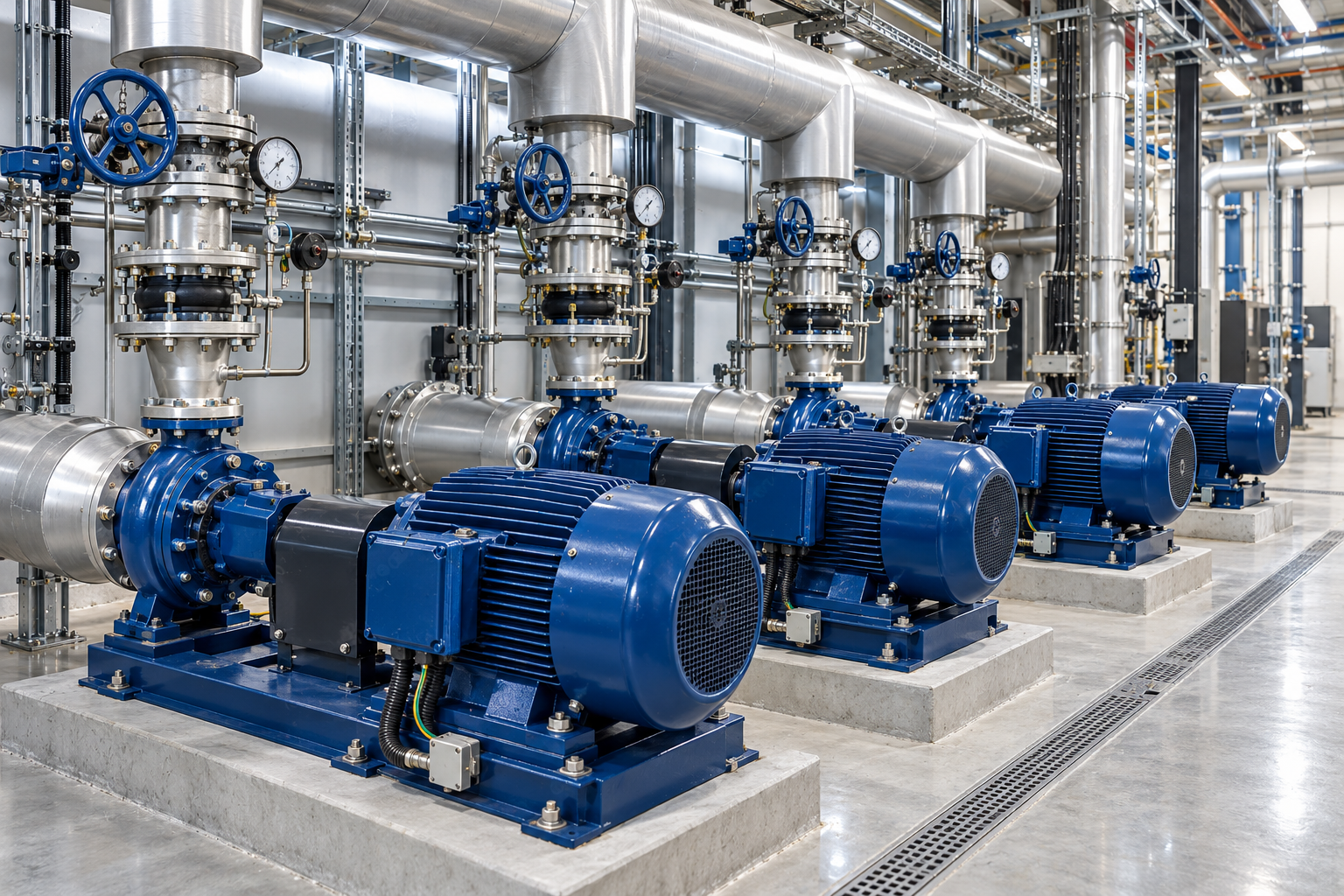
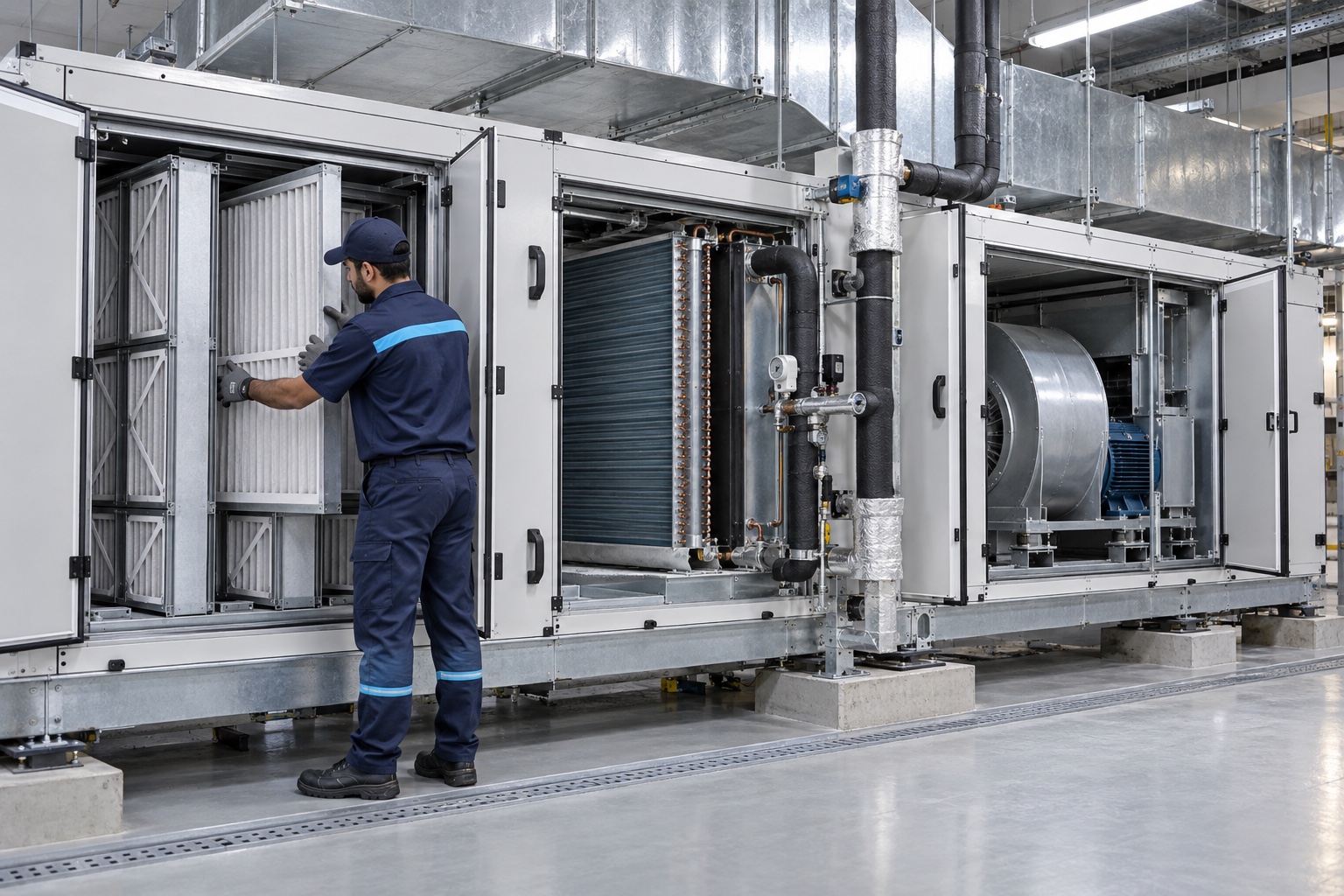
Industrial chillers remove heat from process water, glycol or other secondary cooling loops serving equipment, production or demanding facilities. A sound repair plan considers load, operating sequence, heat exchangers, pumps, controls and safeties as well as the refrigeration components.
Diagnosis before decisions
A clear service process
Measurements guide the repair scope. After the agreed work, operation is checked again against the original symptom.
Confirm process limits, load profile and recent operating events.
Measure circuit, water-side and electrical performance.
Complete the approved plant, control or component work.
Observe loading and confirm stable process temperatures.
Where it fits
Ready when you are
Share the equipment, symptoms and location. We’ll use that information to help define the next step.
Book industrial chillers service